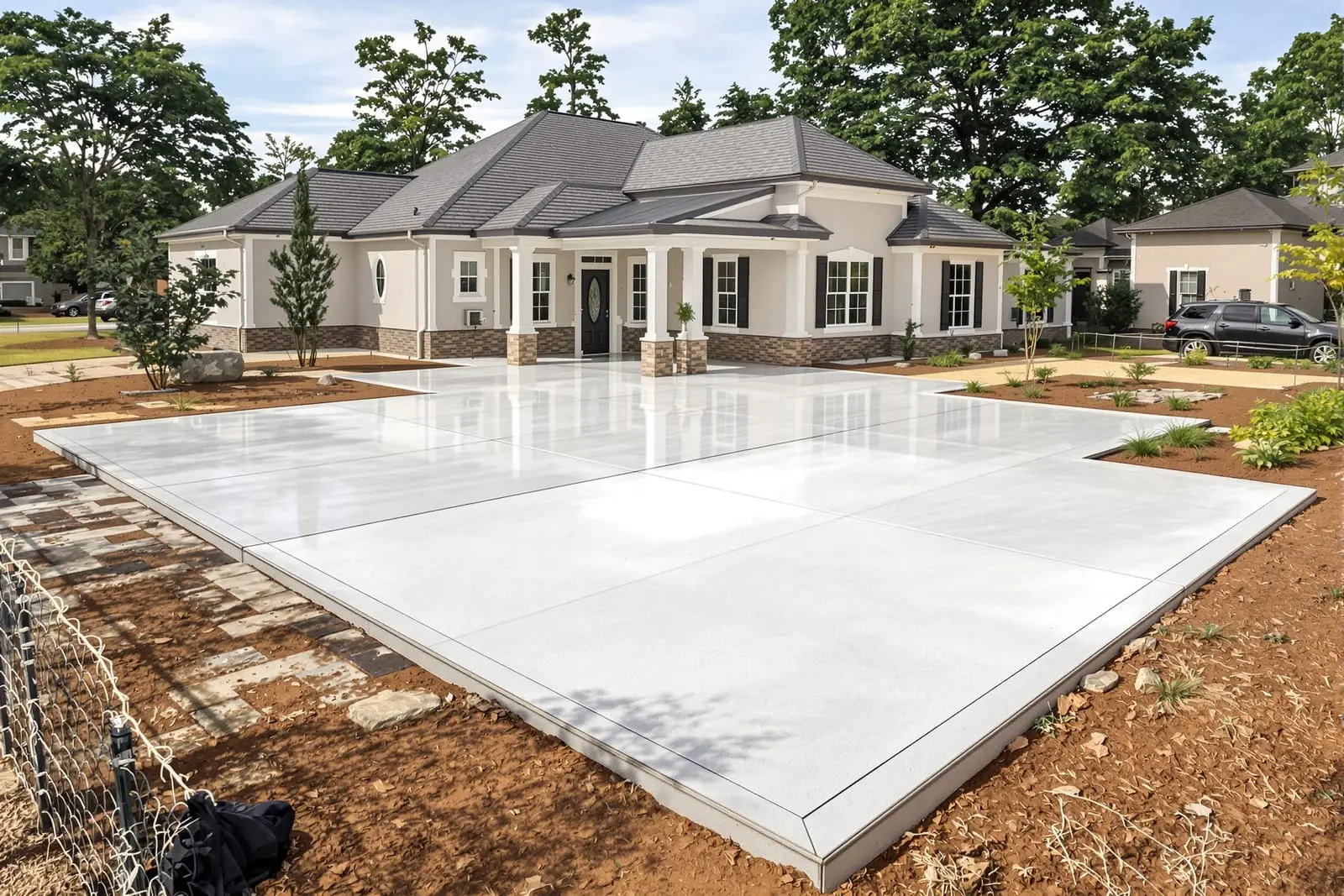
Handle the heavy work with an experienced structural concrete contractor in Phoenix, AZ. We provide footings, grade beams, walls, and other structural elements on commercial projects. Our team coordinates with engineers and other trades to keep sitework concrete on schedule and within spec.
Vanguard Concrete Phoenix provides professional structural concrete throughout Phoenix, AZ and the surrounding area. Our licensed, insured crew delivers safe, clean, on-time work with a free estimate before anything begins. Call (602) 560-6905 or request your free quote.
Sitework & Structural Concrete for Phoenix Properties
Vanguard Concrete Phoenix builds structural concrete that can handle desert heat, sudden monsoon downpours, and expansive soils common across the Valley. When we say structural concrete, we mean the parts of your project that actually carry loads: footings, grade beams, slabs, retaining walls, piers, columns, and structural site elements like thickened-edge drive aisles or equipment pads.
We focus on getting the underlying sitework right before concrete ever hits the form. That includes clearing, grading, compaction, trench backfill, and integrating utilities so that your slab or foundation is not fighting bad dirt or poor drainage. Most of the structural issues we see in Phoenix projects start in the soil or water management, not in the concrete mix itself.
Whether you are planning a new building pad, a heavy-duty driveway, a retaining structure, or a structural slab for equipment, Vanguard Concrete Phoenix handles the full scope from dirt work to finished structural concrete so you are not stuck coordinating multiple subs.
Sitework in Phoenix: Dirt, Drainage, and Subgrade Prep
Proper sitework is critical in the Phoenix area because of caliche layers, variable compaction, and stormwater that shows up hard and fast when monsoon storms hit. Our crews start by stripping organics and unsuitable material, then proof-rolling and testing the native soil. Where we find loose or collapsible material, we undercut and replace it with engineered fill.
We typically import and place ABC (aggregate base course) or engineered fill, moisture condition it, and compact it with rollers or jumping jacks to meet specified density, usually 90 to 95 percent of maximum dry density as required by your engineer or local code. For many structural slabs and foundations we coordinate with a soils engineer for compaction tests and written verification so your permit inspections go smoothly.
Drainage planning is a big part of our sitework. We cut swales, set grades, and install simple yard drains or underground piping if needed so water moves away from structural elements instead of ponding next to them. In older Phoenix neighborhoods, we often correct negative drainage during replacement work, reshaping the site so new structural concrete is not sitting in a bowl every time it rains.
Utility coordination is handled early. We make sure trench backfill is properly compacted so structural slabs that cross utilities do not crack or settle later. Where heavy vehicle or equipment loads cross utility corridors, we may add thicker sections or reinforcement under those crossings.
How We Build Structural Concrete That Holds Up in the Desert
Once the ground is ready, Vanguard Concrete Phoenix follows a clear process to get structural concrete placed and performing the way it should.
Layout and excavation: We shoot grades, mark footing and slab edges, and excavate to design depth, allowing for base material where specified. Footings in Phoenix are commonly deeper at perimeter locations to get below more active surface soils and to meet frost and code requirements.
Forms and reinforcement: We set sturdy forms that can handle the vibration and weight of structural pours. Rebar is placed according to your structural plans, including hooks, splices, and chairs to keep steel at the proper cover. For heavy-duty slabs, equipment pads, or truck access areas, we often install rebar mats, thickened sections under load points, and dowels into adjacent pours or existing structures.
Concrete mix and placement: For structural work we typically use higher strength mixes (3000 to 4000 psi and up) with proper air content and slump. Phoenix heat speeds up set times, so we schedule early morning pours, use shade or water for cooling, and sometimes add set-retarding admixtures so there is enough time to place and finish concrete correctly. We vibrate footings and walls to eliminate voids around rebar and embedments.
Finishing and curing: Structural flatwork is finished according to its use (broom finish for traction, steel trowel for interior slabs, or specialty textures where specified). We cut or saw control joints at calculated spacings to guide shrinkage cracking. Then we cure using spray-on curing compounds or wet curing methods so the slab gains strength properly in the dry Phoenix air, which is critical to reduce curling and surface cracking.
Design Options and Common Structural Elements We Install
Structural concrete is not one-size-fits-all. Vanguard Concrete Phoenix works with owners, GCs, and engineers to match design details to real-world use.
Foundations and footings: We install continuous footings, isolated pad footings, grade beams, and turned-down slab edges for both light commercial and residential projects. Depth and width are based on bearing capacity of the soil, building loads, and code requirements. In areas with weaker soils we may widen footings or use additional reinforcement to distribute loads.
Slabs and structural pads: For garages, shops, and commercial use, slab thickness often ranges from 4 to 8 inches or more, with thicker points under columns or machinery. We can integrate blockouts, trench drains, reinforcing steel, and embedded conduit. For vehicle access and parking that sees work trucks or delivery vehicles, we recommend thicker sections and stronger mixes than typical residential driveways.
Retaining and stem walls: We build cast-in-place walls with proper footings, dowels, and weep holes or drainage systems behind the wall to relieve pressure. In hillside or cut lot situations around Phoenix and nearby foothill areas, correctly engineered retaining structures can prevent soil movement that would otherwise damage slabs and foundations.
Site structural features: These include dumpster pads, loading dock aprons, thickened edges for RV parking, equipment slabs for generators or HVAC units, and structural approaches at garage or bay entries that see repeated loading.
Cost Drivers, Bidding, and What Affects Your Price
Structural concrete pricing in Phoenix is driven by more than just square footage. When Vanguard Concrete Phoenix prepares a bid, we look at site conditions, access, engineering requirements, schedule, and the amount of reinforcement and thickness involved.
Soil and site conditions: Soft or collapsible soils, caliche that requires breaking, poor access for trucks, or the need for extensive grading and base material all increase cost. A flat, open lot with good native soil will always be less expensive to build on than a tight backyard with elevation changes.
Design complexity: Heavier rebar, thicker slabs, deeper or stepped footings, and cast-in-place walls with complex formwork take more labor and materials. Special requirements like doweling into existing structures, epoxy coated rebar, or concrete additives for unique performance needs will affect the price.
Schedule and phasing: If your project requires weekend or night work, multiple small pours instead of fewer large ones, or tight coordination with other trades, that typically adds cost. On the other hand, bundling multiple structural elements into a single mobilization often saves money.
Permits and inspections: Most structural concrete in Phoenix must meet city or county requirements. We can help coordinate inspections for footing steel, forms, and slab prep before placement so there are no surprises that delay your timeline.
What Phoenix Property Owners Should Know Before Hiring
Before you choose a contractor for sitework and structural concrete, it helps to understand where projects usually go wrong in the Phoenix area and how to avoid those issues.
The most common problems we are called to fix are slab cracking from poor subgrade prep, settlement where utilities were not backfilled and compacted properly, and water problems around foundations caused by flat grades. Ask any contractor how they handle compaction testing, what base materials they use, and how they design drainage around structural concrete elements.
Verify that your contractor is comfortable working to engineered plans and is licensed for structural work, not just decorative flatwork. Structural concrete is about load paths, soil conditions, and long-term performance, not just appearance. Vanguard Concrete Phoenix routinely works from stamped structural drawings and coordinates with engineers and inspectors, which helps protect your investment and your permit approvals.
You should also ask how heat and curing will be managed. In our climate, a crew that pours too late in the day or skips curing steps can leave you with a weak or surface-damaged slab. We schedule early, monitor weather closely, and adjust mix and curing methods for each project.
Finally, insist on a clear scope of work. Your proposal should spell out excavation depth, base materials, rebar sizes and spacing, concrete strength, joint layout, and curing method. We put these details in writing so there is no confusion about what is being built and how it is expected to perform over time.
“
Professional sitework & structural concrete, done right the first time, quality materials, honest pricing, and results that last.
Vanguard Concrete Phoenix
Sitework & Structural Concrete Across Our Service Area