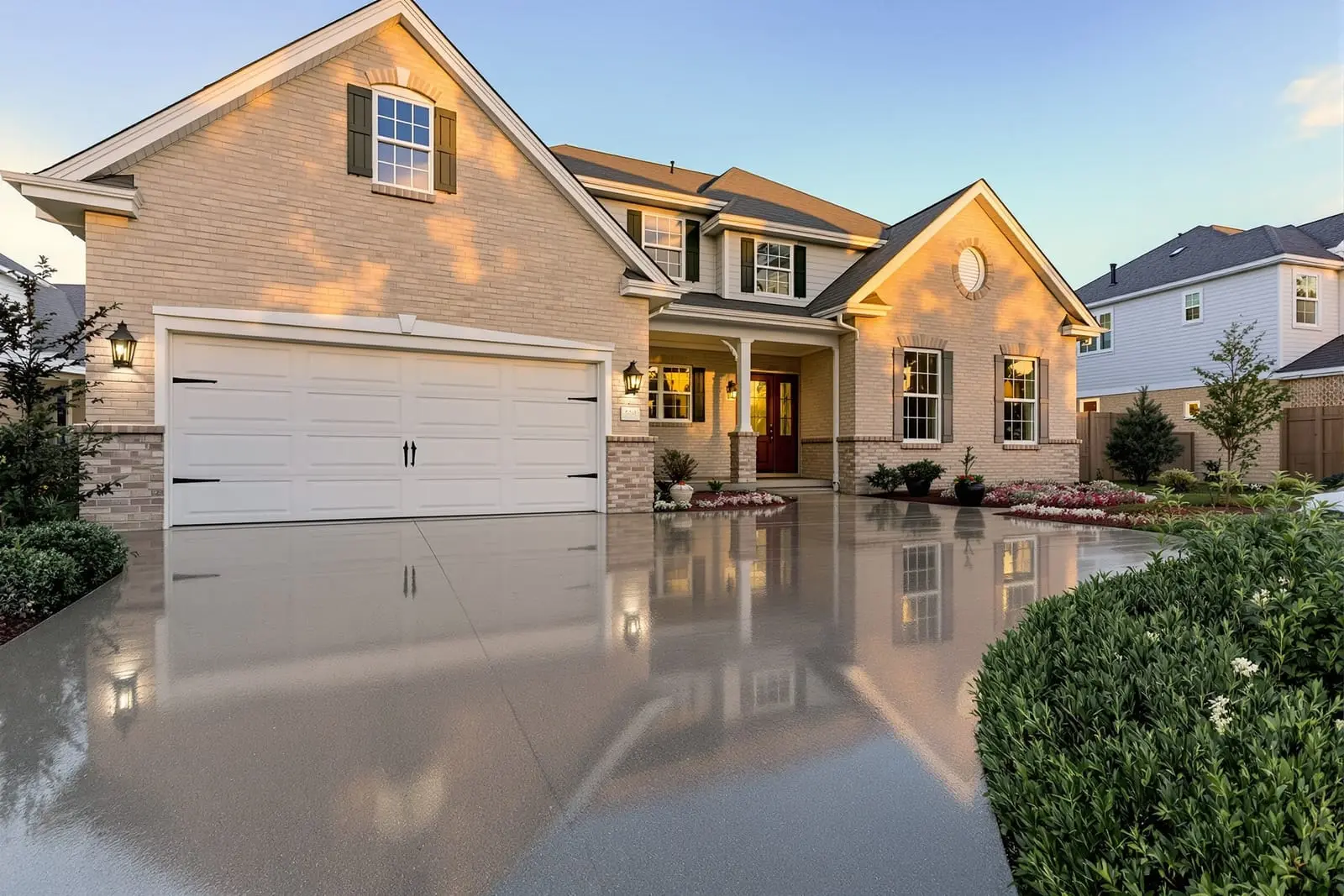
Improve curb appeal and property value with expert concrete driveway installation in Phoenix, AZ. Our team designs and pours driveways built to handle daily traffic and intense heat. We focus on proper grading, reinforcement, and finishes for a smooth and long lasting surface. Schedule a free estimate for your new concrete driveway.
Vanguard Concrete Phoenix provides professional concrete driveway installation throughout Phoenix, AZ and the surrounding area. Our licensed, insured crew delivers safe, clean, on-time work with a free estimate before anything begins. Call (602) 560-6905 or request your free quote.
Concrete Driveways Built for Phoenix Heat and Heavy Use
A concrete driveway in Phoenix has to handle intense sun, big temperature swings, and repeated vehicle loads without cracking apart. Vanguard Concrete Phoenix focuses on driveways that are built specifically for this climate, not just a basic slab that looks good for a year and then fails.
We start every concrete driveway installation by looking at your actual use. Number of vehicles, work trucks or trailers, RV parking, turning radius, and where water flows during monsoon storms all affect how we design and build your driveway. For many Phoenix homes, that means thicker concrete at tire tracks and turning areas, control joint layouts that match your parking pattern, and extra reinforcement where the driveway meets the street.
Our goal is not just a new surface. It is a driveway that will stay level, drain correctly, and resist the common problems we see all over the Valley, like edge cracking, tire rutting from trash trucks, and standing water at the garage.
Our Concrete Driveway Installation Process, Step by Step
A solid driveway starts under the concrete. Vanguard Concrete Phoenix begins by marking utilities and removing old concrete or asphalt with saws and breakers, then hauling everything off site the same day when possible. We excavate to a set depth, usually 6 to 8 inches below the final surface, and we do not rush this step. Uneven or soft subgrade is the main cause of cracking and settling in Phoenix driveways.
Next, we compact the subgrade with plate tampers or rollers and add a base layer where needed, typically 2 to 4 inches of Class 2 or ABC (aggregate base course). In older Phoenix neighborhoods with weaker native soil, we often recommend thicker base rock or soil stabilization. We use a compaction pattern that covers the entire area in multiple passes, not just a single quick run-through.
We then set forms using lumber or steel, staked tightly so they do not move under the weight of wet concrete. This is where we define slope. For Phoenix driveways, we usually aim for about a 2 percent slope away from the house, which helps avoid water backing up toward the garage during heavy monsoon rains. At this stage we also install expansion material where the driveway will meet your garage slab, sidewalks, or curb.
Reinforcement comes next. For most residential driveways we place rebar on chairs or use welded wire mesh, never just laying steel directly on dirt where it does no good. For heavier use, such as RV pads or work trucks, we increase slab thickness (often to 5 inches or more) and tighten the reinforcement pattern.
When we place concrete, we typically use a 3,000 to 4,000 psi mix with air entrainment and additives that help with workability in Phoenix heat. We schedule earlier morning pours in summer to keep temperatures manageable, which improves finish quality and reduces the risk of surface cracking. After screeding and bull floating, we cut control joints at planned intervals and trowel the surface to the chosen finish, often a medium broom that balances traction with ease of cleaning.
Curing is not an afterthought. We apply curing compound or use wet curing methods as needed, especially in hot, dry weather where concrete can lose moisture too quickly. Proper curing is one of the most important steps in a Phoenix concrete driveway installation, and one many contractors skip or rush.
Design and Finish Options for Your Concrete Driveway
A driveway can be a simple gray slab, or it can add real curb appeal. Vanguard Concrete Phoenix offers options that hold up in our climate and are practical to maintain.
For most Phoenix homeowners, the base choice is a standard gray concrete driveway with a broom finish. It provides good traction during rain, dust storms, and when you are washing cars, and it does not get overly slick. We can vary broom direction to align with the way you drive onto the property and to help guide water flow.
If you want a more finished look, we can add borders, saw-cut patterns, or color. Integral color is mixed throughout the concrete, which resists fading better than surface-only stains in the Arizona sun. Lighter colors can reduce surface temperature, which is a real benefit if you have kids playing on the driveway or you work on vehicles outside. Too dark and the driveway can become uncomfortably hot in summer.
Stamping is an option, but we are honest about its pros and cons in Phoenix. Stamped concrete can mimic stone or pavers at a lower cost, but patterns with deep texture can trap dust and be harder to keep clean. We usually recommend moderate textures and a high-quality sealer that is rated for UV exposure. Sealers will need periodic reapplication to maintain appearance and stain resistance.
We also install thickened edges, decorative bands at the street, and widened parking areas for trailers or side-yard access. These upgrades are not just cosmetic. A reinforced edge resists the chipping and breaking that often happens where tires repeatedly roll off the side of a narrow driveway.
What Affects Cost and Timeline for a Phoenix Driveway
Concrete driveway installation costs depend on more than square footage. Vanguard Concrete Phoenix walks you through the main cost drivers before you commit so there are no surprises.
Thickness and reinforcement are two of the biggest factors. A basic residential driveway might be 4 inches thick with standard reinforcement. If you park heavy trucks, RVs, or equipment, increasing the slab to 5 or 6 inches with heavier rebar will cost more, but it is much cheaper than tearing out a failed driveway later.
Site conditions matter. Removing an old driveway, dealing with tree roots, hauling away extra soil, or working on tight sites where ready-mix trucks cannot reach will all affect price and schedule. In some older Phoenix areas, we have to address poor drainage or sunken approaches at the street, which may require additional concrete or coordination with the city.
Finish choices, such as decorative borders, integral color, exposed aggregate, or stamped patterns, also influence cost. We itemize these so you can decide where upgrades make sense and where a clean, standard finish is enough.
Timing in Phoenix is important. The best months for concrete driveway installation are generally October through April, when temperatures are cooler and curing is easier to control. We still pour in summer, but we tend to book early morning slots, use set-control admixtures, and sometimes recommend splitting very large projects into phases. Planning ahead by a few weeks gives us more flexibility to choose ideal pour days and helps avoid weather-related delays.
A typical single-family driveway replacement usually takes 2 to 4 days on site, excluding curing. Day 1 is demo and prep, day 2 is forming and reinforcement, day 3 is pour and finish. In hotter months we like to keep heavy traffic off the new driveway for at least 7 days, and we will give you clear instructions for when you can walk and then drive on the new surface.
Common Driveway Problems in Phoenix and How We Prevent Them
Phoenix driveways tend to fail in predictable ways. Vanguard Concrete Phoenix designs each concrete driveway installation around those specific local issues so you do not end up paying to fix the same problems a few years later.
Random cracking is everywhere in the Valley. Some hairline cracking is normal for concrete, but uncontrolled cracks that wander through the slab are usually tied to poor subgrade prep and bad joint layout. We use compacted base, consistent slab thickness, and planned control joints that encourage cracks to form where they are least visible and least harmful.
Another common issue is heaving or separation where the driveway meets the garage. Temperature swings and different slab thicknesses at that transition create stress. We use proper expansion joints and, where needed, dowels or other details at the garage lip so the two slabs can move without creating a big trip edge.
Drainage problems show up after the first monsoon season. If the driveway is too flat or slopes toward the house, water can pool at the garage or run under the slab. We set slopes carefully, account for adjacent landscaping and sidewalks, and can add drains or slight grade changes to direct water to the street or a safe runoff area.
Surface wear is another concern, especially where tires repeatedly turn in place. In those areas we may recommend a slightly higher strength mix and attention to finishing so the surface paste is not overworked. Over-finished concrete can flake or scale faster in our sun and heat.
Before we leave, we walk the site with you and explain maintenance: when to reseal decorative concrete, how to handle oil stains, and what to avoid in the first month, such as parking heavy trailers for long periods. Clear expectations and good initial construction go a long way toward a Phoenix driveway that lasts.
“
Professional concrete driveway installation, done right the first time, quality materials, honest pricing, and results that last.
Vanguard Concrete Phoenix
Concrete Driveway Installation Across Our Service Area