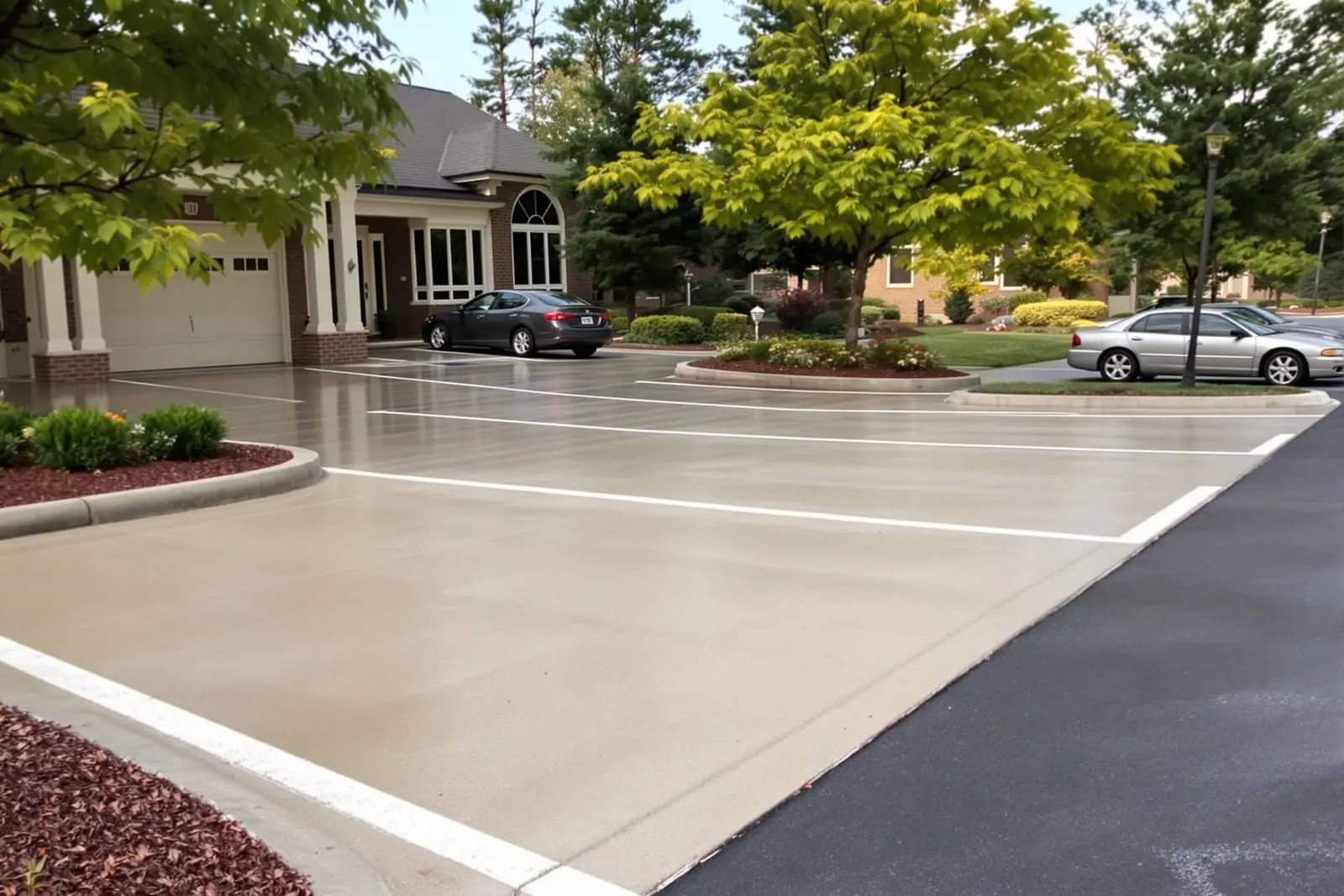
Choose long term performance with a concrete parking lot in Phoenix, AZ. We handle layout, grading, drainage, and paving for small and mid sized lots. Our team pours strong, jointed slabs designed for vehicle loads and partners with striping crews for a complete, ready to use lot.
Vanguard Concrete Phoenix provides professional concrete parking lot throughout Phoenix, AZ and the surrounding area. Our licensed, insured crew delivers safe, clean, on-time work with a free estimate before anything begins. Call (602) 560-6905 or request your free quote.
Concrete Parking Lots Built for Phoenix Conditions
Phoenix is rough on parking lots. Extreme heat, sudden monsoon downpours, and high traffic will quickly expose any shortcuts in design or workmanship. Vanguard Concrete Phoenix focuses on concrete parking lots that actually stand up to this environment, not just look good on day one.
When we look at a new concrete parking lot project, we start with how the space will be used: passenger vehicles all day, delivery trucks a few times a week, or constant heavy equipment. That drives the concrete thickness, the type and layout of reinforcement, and the joint plan. A light retail lot in Phoenix might work at 4 to 5 inches with fiber reinforcement, while a lot that sees regular semi traffic may need 6 inches or more with rebar or welded wire mesh.
Our team also considers heat expansion and direct sun exposure. In Phoenix, poorly planned joint spacing leads to random cracking very quickly. We calculate joint layouts around panel size, expected temperatures, and traffic paths. The result is a concrete parking lot that moves in controlled locations, so you see straight, planned joints instead of jagged cracks.
Our Step by Step Concrete Parking Lot Process
Vanguard Concrete Phoenix follows a very defined process so there are no surprises during construction or after you open the lot to traffic.
1. Site evaluation and layout: We verify property lines, drainage patterns, and existing utilities. On many Phoenix commercial sites, we find compacted decomposed granite or older asphalt beneath the surface. We test that base to see if it can be salvaged or needs to be removed.
2. Excavation and base preparation: We excavate to the designed depth, then install and compact a granular base, usually 4 to 6 inches of ABC (aggregate base course). Proper compaction is critical in Phoenix soils that can be sandy or caliche heavy. We use plate compactors and rollers, then spot check with a compaction meter.
3. Forms, reinforcement, and layout: We set forms to correct elevations to ensure water drains away from buildings and walkways. At this stage we place rebar or welded wire mesh if required, tie dowels at construction joints, and mark control joint locations before any concrete is poured.
4. Concrete placement and finishing: We typically use a 4,000 psi mix or stronger for concrete parking lots, adjusted with additives for hot weather placement. We schedule early morning pours to avoid peak heat, then use screeds and power trowels to achieve a consistent, slip resistant broom finish. This finish gives vehicles traction but is easy to sweep and pressure wash.
5. Joints, curing, and sealing: We cut control joints at the right timing so the concrete is firm enough to saw cleanly but has not started random cracking. Then we apply curing compound that works well in low humidity so the surface does not dry too fast. On many Phoenix projects, we recommend a penetrating sealer after full cure to resist oil staining and extend service life.
Design Options That Matter for Concrete Parking Lots
A concrete parking lot is more than a gray slab. Smart design choices affect safety, ease of maintenance, and how the property looks to customers.
Striping and layout: Vanguard Concrete Phoenix works with your traffic plan, turning radiuses, and ADA requirements to lay out stalls, drives, and accessible spaces correctly. We can install permanent concrete wheel stops or form integral curbs so you have fewer items to maintain or replace.
Thickness and reinforcement choices: For low traffic office or church lots, a fiber reinforced slab at 4 inches may be cost effective. Grocery stores, small industrial sites, and tire shops usually benefit from thicker sections or added rebar under loading paths and dumpster pads. We talk through these options so you are not overbuilding quiet areas or underbuilding critical zones.
Slopes and drainage: Phoenix monsoons will find every low spot. We design the concrete parking lot with consistent slopes toward drains or swales, often 1 to 2 percent, enough to move water without making it uncomfortable to walk or push carts. Where the existing site is flat, we may recommend added area drains or trench drains near building entrances and loading docks.
Color and texture: If heat reduction is a priority, we discuss lighter concrete mixes and reflective sealers that keep surfaces cooler than dark asphalt. For dealerships or higher end retail, we can integrate decorative bands, sawcut patterns, or colored sections near entries while keeping the main drive lanes straightforward and functional.
What Drives the Cost of a Concrete Parking Lot in Phoenix
Vanguard Concrete Phoenix is direct about pricing so you understand where the money goes and where you can save without creating future problems.
Main cost drivers include:
Lot size and access: Larger lots gain some economy of scale, but tricky access for concrete trucks can increase labor and pumping costs. Tight city infill sites often require smaller loads or line pumps.
Thickness and reinforcement: Each additional inch of concrete across a big lot is a substantial volume and cost increase. Rebar, mesh, and dowels add material and labor but may save money over time in high load areas. We often design variable thickness, thicker at drive lanes and dumpster pads, thinner in parking stalls.
Soil correction and base: On some Phoenix sites, the existing soil is too soft or expansive to support a slab. If we find poor subgrade during evaluation, we may need undercutting and replacement with engineered fill, or the addition of geogrid. This upfront cost prevents slab settlement and broken panels a few years later.
Drainage solutions: Adding area drains, underground piping, or trench drains around loading docks increases upfront cost but may be mandatory to keep water away from buildings and keep customers out of puddles.
Timing and phasing: If you need to keep part of your parking lot open, we phase construction. This takes longer and adds mobilization costs, but keeps your business operating. We plan these phases with you so critical customer access stays open.
Common Parking Lot Concrete Problems and How We Prevent Them
We get a lot of calls in Phoenix from owners with parking lots that failed early. The same issues appear again and again, and they are preventable when addressed from the start.
Random cracking: Usually caused by poor joint layout, lack of joints, or inadequate base support. Vanguard Concrete Phoenix designs joint spacing around slab thickness, panel dimensions, and local temperature range, then makes sure saw cuts are made on time and to the proper depth.
Standing water and birdbaths: These come from bad grading or insufficient attention to slopes during finishing. Our crew uses laser levels when setting forms and checks slopes repeatedly during placement. If a panel still traps water during inspection, we correct it before the project is closed out.
Surface scaling and pop outs: In our climate, this typically shows up where weak concrete mixes or improper curing were used. We specify concrete from Phoenix area plants with proven performance, add hot weather admixtures as needed, and enforce curing practices suitable for dry, hot conditions.
Edge breaking and rutting at entrances: The most common spot for early damage is where vehicles first leave the street and climb into the lot. We reinforce and often thicken these entry aprons and tie them structurally to the main slab, so they do not crumble under daily turning traffic.
What Phoenix Property Owners Should Know Before Hiring
Before you hire any contractor for a concrete parking lot, there are a few points you should confirm specific to Phoenix conditions.
Ask about mix design and hot weather plan: Your contractor should know what psi concrete they are using, what admixtures are included for placement in high heat, and how they will schedule pours. At Vanguard Concrete Phoenix we typically pour early morning, stage shade and water for finishing crews, and have a clear plan for curing under low humidity.
Request a joint and reinforcement plan: You should see where control joints will go, what type of reinforcement is used, and how thick the slab will be in each area. If the contractor cannot explain why joints are spaced the way they are, that is a red flag.
Clarify drainage outcomes, not just slopes on paper: Confirm that the finished concrete parking lot will drain away from your building and that any known low spots are addressed. We often walk the existing site with owners after a rain or review photos of puddling areas to design specific fixes.
Understand downtime and reopening: Concrete needs time before it can take traffic. In Phoenix conditions, light foot traffic is usually allowed after 24 hours, passenger vehicles after about 5 to 7 days, and heavy trucks after 7 to 14 days depending on mix and thickness. We build this into your schedule so you can plan operations or temporary parking arrangements.
If you want a parking lot that can handle Phoenix summers, monsoons, and daily use without constant patching, Vanguard Concrete Phoenix is prepared to design and build it with the right details from subgrade to striping.
“
Professional parking lot concrete, done right the first time, quality materials, honest pricing, and results that last.