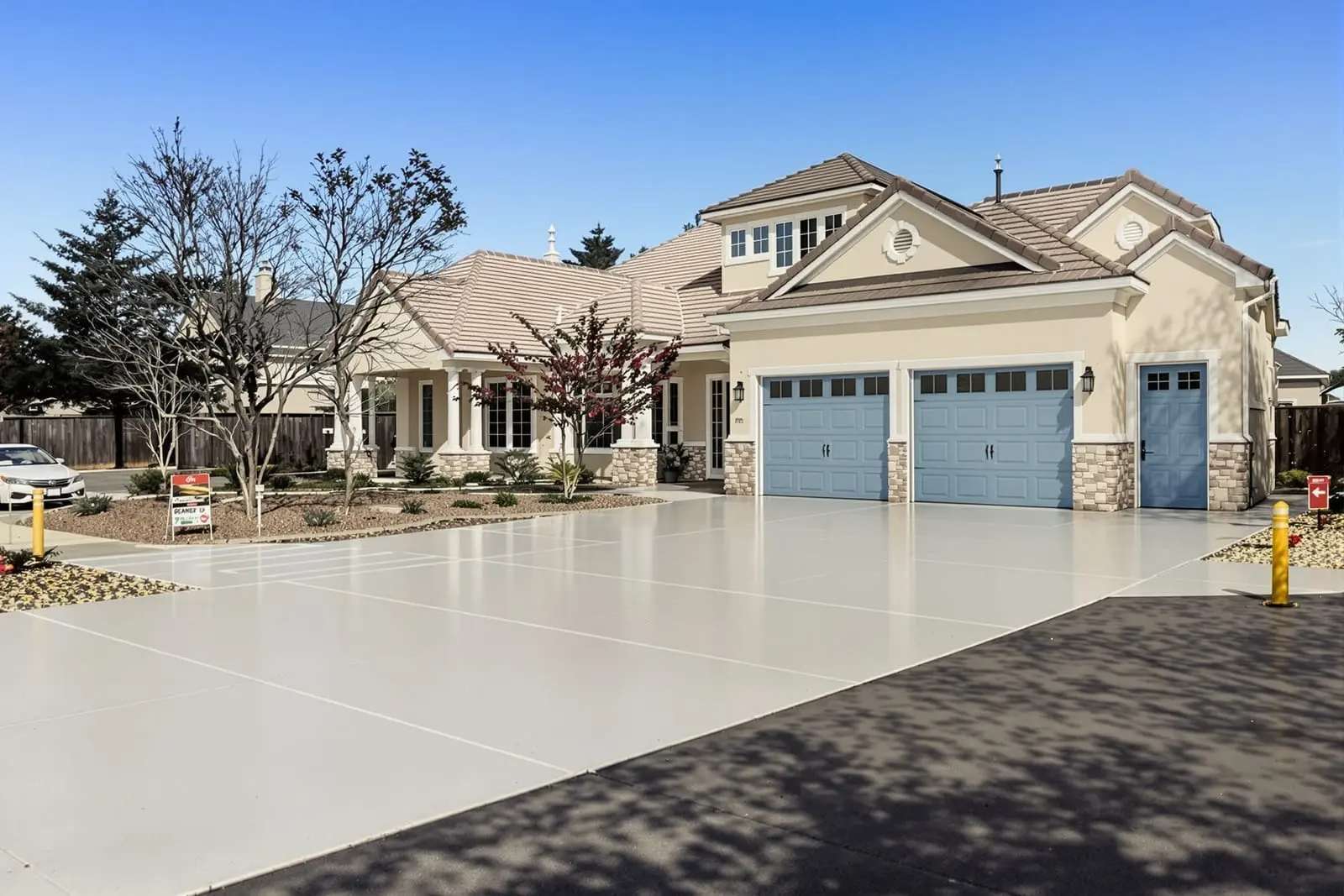
Support your business with durable commercial concrete paving in Phoenix, AZ. We install drive lanes, dumpster pads, loading areas, and common walkways for offices and retail sites. Our crews pour reinforced slabs that handle traffic and heavy loads. Request a detailed proposal for your next commercial paving project.
Vanguard Concrete Phoenix provides professional commercial concrete paving throughout Phoenix, AZ and the surrounding area. Our licensed, insured crew delivers safe, clean, on-time work with a free estimate before anything begins. Call (602) 560-6905 or request your free quote.
Commercial Concrete Paving for Phoenix Businesses
Vanguard Concrete Phoenix focuses on commercial concrete paving that holds up to real Phoenix conditions: extreme heat, monsoon downpours, and heavy traffic from cars, trucks, and delivery vehicles. Our crews work on parking lots, drive lanes, loading areas, dumpster pads, walkways, and access ramps for properties across the Valley.
Instead of treating every project the same, we look at how your site is actually used. A retail center with daily customer parking needs different pavement than an industrial yard seeing regular semi truck traffic. We design slab thickness, reinforcement, and joint layout around your use, soil conditions, and drainage needs.
Most of our customers are property managers, general contractors, and business owners who need reliable timelines and clear communication. We schedule work to minimize disruption to tenants and customers, often phasing larger parking lots so you keep some stalls open at all times. Vanguard Concrete Phoenix pulls permits when required, coordinates inspections, and keeps you updated at each stage so there are no surprises.
How Our Commercial Concrete Paving Process Works
A commercial concrete paving project with Vanguard Concrete Phoenix starts with a site visit. We measure existing areas, check slopes and drainage, and probe the subgrade to see how stable the soil is. In Phoenix, we often find sandy or caliche soils that need specific preparation to prevent future settling or cracking.
Once we understand your site, we provide a written proposal that spells out slab thickness, reinforcement type, concrete strength, and the work sequence. For high load areas like drive lanes and dumpster pads, we commonly use 6 inch slabs with rebar or heavy welded wire mesh and a 4000 psi mix. For standard parking stalls or walkways, 4 to 5 inch slabs may be appropriate, depending on use.
On paving day, we start with demolition and removal of old pavement if needed. We haul broken concrete or asphalt off site to approved facilities. Then we grade and compact the base. In the Phoenix area, we typically use ABC (aggregate base course) compacted to a specified density to lock in a stable foundation. Poor base work is one of the main reasons concrete fails early, so we spend time getting this right.
After the base is compacted, we set forms, check elevations with laser levels, and place reinforcement. We then pour concrete using ready mix trucks, vibrate and screed the surface, and finish it with the texture you choose. Control joints are cut at specific intervals to manage cracking. Finally, we cure the slab to protect strength development in the heat, then return to sawcut, seal, and stripe as needed.
Material, Thickness, and Finish Options for Phoenix Projects
Commercial concrete paving in Phoenix has to handle heat, UV exposure, and sudden monsoon runoff. Vanguard Concrete Phoenix selects mixes and finishes with this in mind. Most commercial slabs use 3500 to 4500 psi concrete with proper air entrainment and additives that slow down set times in hot weather so the surface does not flash set and weaken.
For thickness, light duty parking and walkways usually fall in the 4 to 5 inch range. Drive lanes, fire lanes, and busy drive thrus are commonly 5 to 6 inches. Heavy truck routes, loading docks, and dumpster pads can go 6 inches or more with added reinforcement. We will walk you through where thicker sections make financial sense and where standard depth is enough.
Finish choices depend on use. Broom finish is typical for parking lots and sidewalks because it gives traction during rare wet periods and is budget friendly. For warehouse aprons and loading zones that need easier cleaning for pallet jacks and forklifts, we may use a hard troweled or lightly broomed surface. Around storefronts, we can add decorative elements like integral color, borders, or sawcut patterns, while still keeping the main paving functional and durable.
We also talk about sealing. In Phoenix, a penetrating sealer can help reduce surface dusting, staining from oil leaks, and early wear from intense sunlight. Not every area needs sealing, so we point out where it offers value, such as high visibility storefront parking or premium tenant spaces.
What Drives Cost and How to Control It
The cost of commercial concrete paving in Phoenix is shaped by several specific factors: slab thickness, reinforcement type, access for trucks and equipment, demolition requirements, and drainage or grading challenges. Vanguard Concrete Phoenix itemizes these so you understand where your money is going.
Thickness and reinforcement are usually the biggest drivers. A 6 inch rebar reinforced truck lane will cost more per square foot than a 4 inch mesh reinforced parking stall row, but cutting thickness where heavy vehicles turn or stop can lead to early failure. We often recommend a mix of sections, heavy duty concrete where needed and standard sections for the rest, so you do not overspend where you will not gain extra life.
Site conditions matter. Tight access behind existing buildings, working around live utilities, or phasing a job so you can stay open will increase labor time. We help control this by planning work in logical phases and scheduling early morning pours to beat the heat and reduce finishing problems.
Drainage corrections can add cost but prevent future headaches. Many Phoenix lots were built years ago with minimal slope, which means ponding water during monsoons. If we see standing water issues, we may recommend regrading, additional catch basins, or adjusted slopes. Investing in proper drainage is often cheaper than repeated patching and trip and fall claims.
To keep your budget in line, we can price alternates, like different finish levels, staged replacement instead of full replacement at once, and optional sealing or striping packages, so you can choose what fits your capital plan.
Common Phoenix Problems and How Vanguard Concrete Phoenix Prevents Them
Phoenix commercial concrete fails in recognizable ways: random cracking, settled slabs at dumpster enclosures, broken edges where trucks turn, slippery surfaces at drive thrus, and water ponding after monsoon storms. Vanguard Concrete Phoenix designs and builds paving specifically to avoid these local issues.
Random cracking is managed with proper joint spacing and depth. We plan joint layouts based on the panel size and shape, not just a rough grid, and we sawcut as soon as the concrete is strong enough to prevent raveling, often the same day or early next morning. For areas that see thermal stress from dark asphalt tying into concrete, we use isolation joints to separate movements.
Settlement at dumpster pads and loading docks is common because of poor subgrade. We test the subgrade, add compacted base, and often thicken the slab in these zones. In heavy use areas we may also add dowels at joints so panels transfer loads without breaking down at the edges.
To handle heat and sudden rain, we manage slope carefully. Even a quarter inch per foot change can move water away from storefronts and entries. Where we cannot change the slope enough, we discuss trench drains or area inlets tied to the existing storm system.
Safety is another focus. For walkways, accessible routes, and ramps, we use a consistent broom finish and check slopes against ADA guidelines so surfaces are not too steep or slick. Around drive thrus and high traffic pedestrian crossings, we can use contrasting joints or surface treatments to make paths clearer for drivers and walkers.
When you bring in Vanguard Concrete Phoenix early in planning, we can review your plans, flag design issues that will not perform well in our climate, and suggest practical changes before you pour money into a layout that will fail early.
“
Professional commercial concrete paving, done right the first time, quality materials, honest pricing, and results that last.
Vanguard Concrete Phoenix
Commercial Concrete Paving Across Our Service Area